Hi! Remember me? I used to occasionally blog about the writing process and my obsession with pop tarts. I took a break because I had nothing more to say. And because I moved. In more ways than one.
Well, I'm back. Sorta.
I'm living in a new (old, actually) state, and my blog has moved as well.
You can now find it here, at the revamped and revitalized Elisa Lorello Official Website. C'mon in. Take a look around. Pull up a chair.
And thanks for waiting.
Wednesday, February 27, 2013


Tuesday, September 4, 2012
On hiatus
Friends, I was shocked to discover that I haven't done a blog post in a month. The time has been flying like an arrow. I've been busy with first drafts -- completed two this summer, and in the middle of a third. Typically I work on one project at a time, from start to finish. In this case I still worked on one at a time, but opted to get all three drafts on the page before I needed to put all my attention on packing and moving back to the northeast, which is taking place within the next month. Yep. A big life change. I have loved the six years I spent in North Carolina and am going to miss so many things, including my friends, the weather, the city of Raleigh, and much, much more. And yet, my heart is telling me I'm moving in the right direction. (My head, of course, tells me I'm nuts.)
And so, I apologize for doing this again, but I'm going to have to put the blog back on hiatus until December.
However, you'll still be able to find me on Twitter and my author page on Facebook, where I've been posting little teases from my fourth novel, Adulation, to be released in November and available for pre-order now. Additionally, the audiobook editions of all four of my novels are also available for pre-order and coming out very soon.
I also recommend you check out a website called New Wave Authors, which features books, events, and blogposts by my fellow Amazon Publishing authors and occasionally one from me.
Take good care, friends. Happy reading, happy writing, and safe travels. Don't forget to vote in November.
And so, I apologize for doing this again, but I'm going to have to put the blog back on hiatus until December.
However, you'll still be able to find me on Twitter and my author page on Facebook, where I've been posting little teases from my fourth novel, Adulation, to be released in November and available for pre-order now. Additionally, the audiobook editions of all four of my novels are also available for pre-order and coming out very soon.
I also recommend you check out a website called New Wave Authors, which features books, events, and blogposts by my fellow Amazon Publishing authors and occasionally one from me.
Take good care, friends. Happy reading, happy writing, and safe travels. Don't forget to vote in November.
Thursday, August 2, 2012
the writer and self-control
"Enthusiasm is the vital quality that arouses you to action, while self-control is the balance wheel that directs your action so that it will build up and not tear down."The next lesson in the Law of Success sequence is self-control, and it couldn't have come at a better time. A friend and fellow author recently wrote a blog post about her experience with a reader who unfriended her on Facebook because he believed that, as a published author (meaning, as someone with a public persona), it wasn't her place to be political. I disagreed with his stance for several reasons, but there is a caveat, a reminder that the internet is "written in ink," and leaves a fingerprint.
What we say and do, and how we conduct ourselves, makes a lasting impression. And that goes for anyone in any profession. We have to be professional. We have to be responsible with our words and our action. Self-control isn't about restraint, it's about integrity.
Participating in civil discourse is vital to being a writer. There's nothing wrong with expressing an opinion on a personal page, be it political, religious, or literary. As writers, we are witness to the world around us. We need to be observers as well as participants if we are to do our job well. If we want to write about things we care about, we have to find out what those things are. We have to expose ourselves to things we don't know, don't like, don't agree with, don't believe in in order to figure out what we do know, do like, do agree with, and do believe in. And these things change over time.
In other words, we need people to disagree with us in order to strengthen what we believe so we can make the best argument (something I tried to instill in my first-year students). The key words in the above quote, the ones Hill didn't italicize, were "build up and not tear down." ("Balance" is also an important word.) Discourse and debate in this country have become destructive--they tear down rather than builds up. We seek to do the former. We seek to build up. We seek to construct.
Napoleon Hill goes on to say this:
"A person with well-developed self-control does not indulge in hatred, envy, jealousy, fear, revenge, or any similar destructive emotions. A person with well-developed self-control does not go into ecstasies or become ungovernably enthusiastic over anything or anybody."(I think that last bit means stalkers need not apply.)
Writers, of all people, know that words carry integrity. It's how we express our opinions that matter, and how we treat others in the discourse.
We don't spam discussion forums, don't bombard people's Twitter and Facebook feeds with "Buy My Book!" all day, every day.
We don't camp outside an agent's office in an attempt to be represented, or send bottles of champagne to reviewers in hopes they'll offer a favorable review.
We don't pick fights with readers who write bad reviews.
We don't publicly trash other authors or genres. (We can have opinions about the quality of writing that disagree with others', and we can express them, but we can do so in a way that keeps our author ethos intact.)
We don't use ad hominem, strawman, and other logical fallacies to attack rather than argue.
I want to clarify that I'm not advocating for writers go out of their way to not offend anyone. If I believe an injustice is taking place, then I speak out against that injustice, even if it means I lose readers along the way. Because speaking out about the things I believe in is just as vital to my integrity as the manner in which I speak out. If I clam up for fear of losing book sales, then I've lost much more.
Overall, I cannot sacrifice good citizenship for good sales.
Wednesday, July 11, 2012
going viral--with enthusiasm, that is
I've taken a couple of weeks out of the writers success series to pay homage to some of my favorite people (who also happen to be writers), but I'd like to resume with the next lesson in the Law of Success book: enthusiasm. Rather than use Napoleon Hill's definition, I'm going to refer to another in the consciousness movement, Eckhart Tolle.
Perhaps my favorite student evaluation comes from those who say, "Professor Lorello's love for writing made me want to love it, too. Or at least like it." Enthusiasm is contagious. It spreads not only to others but to everything we do, not just the things we normally like.
This is where the advice "Write the book you want to read" comes in yet again, because it's directly tied to enthusiasm. If you try to write a book by predicting the marketing trends, statistics of what genre readers like, or by copying the style of other writers, you'll only get so far. I'm sure I could attempt a vampire romance novel, perhaps even a mashup. They seem to be selling very well these days. But it would probably suck (no pun intended). Why? Because I'm not really into vampires. Because I wouldn't even know where to begin, other than a vampire who is remarkably similar to Ferris Bueller. Because I wouldn't have much fun writing it. It would be laborious, tedious, quicksand. It would be mudpiles rather than sandcastles.
The enthusiasm you have for your book will spread to others. They'll enjoy reading it as much as you did writing it. Ever watch a musician who is just having the time of his life on stage? Makes you wanna pick up a guitar and join him, even if you don't know how to play. Years ago, when I went to see Brian Wilson perform the Pet Sounds album, he told the crowd, "Listen to the harmonies in this one--they're terrific." We laughed, but we listened. And we loved it. They were terrific.
I find that so many writers (myself included) talk about the work aspect of writing, how hard it is. And yes, sometimes it is. But more often than not I find myself approaching it willingly, happily--yes, enthusiastically. And when I do, the time passes in a flash, the words practically jump onto the page, and I don't care whether it's good or bad. In fact for me, the "goal or vision" I worked toward--making a living solely as a full-time writer--was propelled by my enjoyment, my enthusiasm. My friends and family have called me whimsical, idealistic (even lazy), but I have often believed that work and play should be synonymous. That doesn't have to mean easy, but it should be enjoyable. It should be fulfilling. It should be energy releasing, not energy consuming.
Ben Cohen and Jerry Greenfield (founder of Ben&Jerry's ice cream), said, "If it's not fun, why do it?" I've tried to live by that motto, but all too often I get caught up in the complaining, the rationalizations, the practicality such a statement arguably lacks. Maybe it does, but I'm a much nicer, happier, productive person when I'm living it rather than trying to prove it wrong.
I love being a writer. That's the bottom line. I love putting words together, putting my imagination to play, making writing choices, solving problems, and telling truths. I love reading and re-reading those words, and re-seeing and re-writing them. I love creating characters and recording what they have to say. I love alliteration, love amplification, love repetition. I love when language becomes the sandbox. I love when someone else loves what I've written, laughs because of it, and is inspired to write something of their own. I love that I get paid for writing. And I love that I get to teach writing to others. I love talking about writing, and even writing about writing.
We should all be so blessed.
"Enthusiasm means there is a deep enjoyment in what you do plus the added element of a goal or a vision that you work toward. When you add a goal to the enjoyment of what you do, the energy-field or vibrational frequency changes."That last bit probably sounds like a bunch of hocus-pocus, happy-crappy new-agey stuff, right? But think about it. Ever been around someone who was enthusiastic about a certain task, such as cooking or organizing a closet? The task itself not only became less daunting, but enjoyable. The momentum to do it shifted, and the task probably got done quicker than if you/they had approached it with dread.
Perhaps my favorite student evaluation comes from those who say, "Professor Lorello's love for writing made me want to love it, too. Or at least like it." Enthusiasm is contagious. It spreads not only to others but to everything we do, not just the things we normally like.
This is where the advice "Write the book you want to read" comes in yet again, because it's directly tied to enthusiasm. If you try to write a book by predicting the marketing trends, statistics of what genre readers like, or by copying the style of other writers, you'll only get so far. I'm sure I could attempt a vampire romance novel, perhaps even a mashup. They seem to be selling very well these days. But it would probably suck (no pun intended). Why? Because I'm not really into vampires. Because I wouldn't even know where to begin, other than a vampire who is remarkably similar to Ferris Bueller. Because I wouldn't have much fun writing it. It would be laborious, tedious, quicksand. It would be mudpiles rather than sandcastles.
The enthusiasm you have for your book will spread to others. They'll enjoy reading it as much as you did writing it. Ever watch a musician who is just having the time of his life on stage? Makes you wanna pick up a guitar and join him, even if you don't know how to play. Years ago, when I went to see Brian Wilson perform the Pet Sounds album, he told the crowd, "Listen to the harmonies in this one--they're terrific." We laughed, but we listened. And we loved it. They were terrific.
I find that so many writers (myself included) talk about the work aspect of writing, how hard it is. And yes, sometimes it is. But more often than not I find myself approaching it willingly, happily--yes, enthusiastically. And when I do, the time passes in a flash, the words practically jump onto the page, and I don't care whether it's good or bad. In fact for me, the "goal or vision" I worked toward--making a living solely as a full-time writer--was propelled by my enjoyment, my enthusiasm. My friends and family have called me whimsical, idealistic (even lazy), but I have often believed that work and play should be synonymous. That doesn't have to mean easy, but it should be enjoyable. It should be fulfilling. It should be energy releasing, not energy consuming.
Ben Cohen and Jerry Greenfield (founder of Ben&Jerry's ice cream), said, "If it's not fun, why do it?" I've tried to live by that motto, but all too often I get caught up in the complaining, the rationalizations, the practicality such a statement arguably lacks. Maybe it does, but I'm a much nicer, happier, productive person when I'm living it rather than trying to prove it wrong.
I love being a writer. That's the bottom line. I love putting words together, putting my imagination to play, making writing choices, solving problems, and telling truths. I love reading and re-reading those words, and re-seeing and re-writing them. I love creating characters and recording what they have to say. I love alliteration, love amplification, love repetition. I love when language becomes the sandbox. I love when someone else loves what I've written, laughs because of it, and is inspired to write something of their own. I love that I get paid for writing. And I love that I get to teach writing to others. I love talking about writing, and even writing about writing.
We should all be so blessed.
Wednesday, June 27, 2012
Nora Ephron: a writer for all women; a woman for all writers
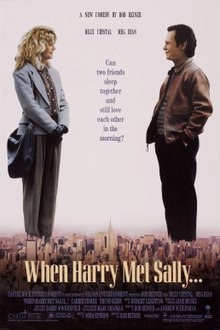
 Most people know I have a freakish memory when it comes to certain events, significant and seemingly insignificant alike. But for the life of me I cannot remember the first time I saw When Harry Met Sally.
I don't think it was in the theater; in fact, I think it was a few years after its release. How or why that happened, I'm not sure. But by the time the credits rolled, When Harry Met Sally shot up to the top of my all-time favorite movies list, and has been there ever since.
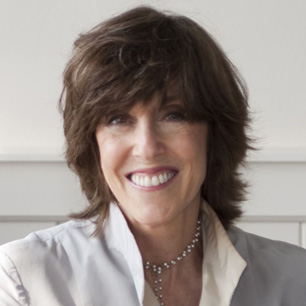
To say that Nora Ephron was an inspiration to my life as a writer would be an understatement. In truth, she was so much more -- she inspired me as a woman. Few people know, for instance, that she worked in the Kennedy administration. She also broke through the male dominated field of journalism (although in those days, just about every field was male dominated), eventually writing for Esquire. She was a part of and wrote about the women's movement as it unfolded, and left her mark on it not only in words, but deeds.
And she was funny.
In her films and essays and articles, Ephron so wonderfully captured not only the transformative powers of food, but its effect on love, and vice-versa. Despite having a rocky love life for the first part of her life, Ephron seemed to be the eternal optimist when it came to romance--or, at least, she imparted that in her characters while exposing all the wonderful, comical absurdities about relationships that I so love to capture in my own novels.
Some fellow authors and I have been sharing good and bad writing advice we've received over the years. We debated over one that says "Write what you know." Nora Ephron took that one to heart (namely, when she wrote Heartburn, a fictionalized tale of the end of her marriage to Carl Bernstein). Manhattan became just as much of a character in her films as Meg Ryan did. She loved being a writer. She loved books. She loved cooking. Her characters were often journalists or cookbook authors.
I followed suit when I wrote Faking It. As I've share many times here and in interviews, I didn't have much self-confidence when it came to fiction-writing. I was more comfortable with the personal essay. So I thought: What Would Nora Do? and proceeded to rely on the superficial details of my life for Andi's. Italian-American heritage. Long Islander. Writing professor (which worked out in more ways than one). What's more, there wouldn't have been a Faking It had it not been for When Harry Met Sally. Because what followed the "what if an inhibited woman meets an uninhibited guy" was "and what if they become friends?"
In Julie and Julia, there's a moment when Julie talks about the imaginary conversations she has with Julia Child as she cooks. That was all Nora, who often did the same thing--not just with Child, but other famous chefs of her time, some of whom she got to meet and interview during her journalism career.
She's not the only one. Many times I've envisioned the same thing. Nora and I have lunch (always lunch, for some reason, even though it's my least favorite meal, menu-wise) at some Manhattan bistro. (Or in the Hamptons. I heard she had lived there for awhile.) The conversation goes something like this:
Nora: I read Faking It.
Me: What did you think?
Nora: You know I wanted to sleep with Devin the moment I met him.
Me: Yeah. Everyone does.
Nora: I also think you probably ruined it for male escorts everywhere.
Me: I wouldn't know. I made all that up.
Nora: Neither would I. But it's fun to imagine it.
I would then ask her to explain the virtues of baking your own bread just to see the look on her face when she did.
At the end of lunch, when we parted ways, I imagined her saying this: "Have Meryl Streep play you in a movie sometime. You won't regret it."
I've imagined my novels getting the Nora Ephron treatment on the screen. Ok, so I never saw Tom Hanks as Devin (or Billy Crystal, for that matter) or Meg Ryan as Andi, and I can't help but think she'd re-set Why I Love Singlehood in New York City than Wilmington, NC. But I believe they'd be good. There are few others I'd trust to adapt my work.
And yet, I don't have to re-read my novels to know that they already have the Nora Ephron treatment. She's on almost every page, either in homage to one of her films (slight tangent, but "I'll have what she's having" was a line that Billy Crystal came up with), or her writing style and ethic. Nora Ephron was a colossal re-writer. Perhaps our ways of doing so differed (I seem to recall her saying that she used to re-write as she went along, which undoubtedly cost her a lot of paper, typewriter ink, and white-out in the days before word processing), but I knew we both wanted to make sure we got the right words.
Most importantly, if it wasn't for women like Nora Ephron, I wouldn't have been able to be a respected college professor, single woman, or published author.
I am sad that I'll never get to have lunch with Nora Ephron for real, and I don't know if she read any of my books. I hope/wish she had. But I take comfort in knowing that she has left something behind for all woman. A glass ceiling with holes in it, a legacy of good writing, a few good recipes, and the mother of all fake orgasms.
I'll miss you dearly, Nora.
Wednesday, June 20, 2012
And we’ll sway in the moon the way we did when we were younger… (Reflections on life, writing, and my relationship with Duran Duran, and a birthday message for John Taylor)

When I stop to think about the long-term, committed relationships in my life outside of family, I never could have predicted that one of the longest, most committed of them has been with a pop icon. OK, so with the exception of a couple of replied tweets in the last two years, it’s mostly been one-sided. Some might argue that as a result, the word “relationship” doesn’t qualify. But I disagree. In fact, my twenty-nine year relationship with Duran Duran—and bassist John Taylor—has been one of the constants in my life. Writing and chocolate are among the others.
John Taylor was always the band member who got the most screams, sold the most posters and pin-ups, and won the coveted button real estate on our denim jackets and pocketbook straps. I had a lot of competition when it came to winning John’s heart, but I had always claimed to have an advantage: I got the music. After all, I was the youngest in a family of musicians. My first words very well may have been “yellow submarine.” I could hear and sing two-part harmony by myself. I knew what a drum fill was, and understood technical terms like “reverb.” I knew what a Linn drum was. I even knew that John played an Aria Pro II bass guitar, that he played a Rickenbacker bass in the “Planet Earth” video, and how those both differed from, say, a Fender bass. I knew the difference between a demo and a master. I knew how long it took to mix a single song (and that the meal of choice after an all-night mixing session was beer and eggs).
Surely, at 15, I was going to wow him with this knowledge. But I never got the chance.
At that time, the age gap seemed so wide, so impossible to close. My first foray into fiction were the secret stories I used to write in which my best friend and I magically aged seven years, magically materialized in the right place at the right time (a.k.a., meeting the band and being whisked away with them to some tropical island), our hair and faces and bodies magically transformed to sexy and irresistible rather than adolescently awkward (and, in my case, overweight). Of course, they would all fall in love with me, but John would be the lucky one. Because John would win my heart. Better still, I would win his.
I wrote a collection of these stories—enough for an anthology—and what strikes me about them now is how much of a lifeboat they were for me. The mid-eighties were the most tumultuous time in my life. I had been raised in the age of the pending nuclear holocaust, but I hadn’t been prepared for the bomb blast that had been the end of my parents’ marriage, and the way my siblings and I all wandered aimlessly, trying to survive the fallout like in those post-nuke propaganda movies.
But Duran Duran was the band that famously announced they would be playing when the bomb went off, and they lived up to that. They gave me purpose and direction. They comforted me when I was in despair, stimulated me when I was numb, provided the exclamation point when I was happy. And they continue to do so. When I’m feeling good, I listen to Duran Duran to enhance the high. When I’m feeling down, I listen to them to cheer me up. And when I’m just living daily life, Duran Duran is the soundtrack to that life. And they still makes me wanna dance.
(I haven’t even mentioned what being at a live Duran Duran concert is like. That’s a whole other blog post.)
I’ve never shown anyone those stories. They’re pretty awful, writing-wise. Totally cringe-worthy. But that’s not the only reason why I’ve kept them under lock and key. To show them to someone else is to let them see too much of who I was desperate to be. There’s too much painful reality in that fiction. I’ve not even dared to peak at them in over twenty-five years. Yet I’ve never been able to bring myself to destroy them, either. Moreover, I’ve recently learned that I’m not the only one who indulged in this kind of fan fiction; a Facebook friend revealed that she and her friends used to do the same thing. A blog post by another fan shared similar stories. I’d had no idea there was a community of us, and I wondered if they wrote for the same reasons I did. The writing teacher in me couldn’t help but envision a present-day Duran Duran fan fiction-writing workshop in which, some thirty years later, we take our purple pens to our spiral notebooks again and write new stories. Why would we write them now? Do we even need to? What would they be about today?
For one thing, the age gap has closed. I don’t have to be older, thinner, prettier. I turned out OK. The gap has finally closed, and we have more in common than ever before.
For another thing, being whisked off to a tropical island with the guys is no longer a priority (although let’s face it: I wouldn’t fight any of ‘em off if that’s what they wanted to do).
It’s come to this: the adult me doesn’t dream about marrying JT as much as she does of sitting back and having a conversation with him, talking about the things that matter: love, family, writing, and, of course—always—music. I could talk about the music all day. Better yet, with the impending release of John Taylor’s memoir, we get to share the experience of being published authors. We get to be colleagues now rather than fan and star.
My stories today wouldn’t be so much about escaping to a happier place as much as it would be about nurturing the place I’m in right now, and making the relationship more mutual. John and the other bandmates may not know my name or my face or have read any of my novels, but that doesn’t mean I had nothing to give them over the years, or that they didn’t receive it. I paid forward the gifts they gave to me. I healed from the painful parts of my past. I grew into the person I am today. I fell in love with other people and places and songs and words.
They’ve influenced me as a writer, too. Perhaps the most obvious hint is that band’s song “Ordinary World” was the inspiration for my novel of the same name. And my readers can always find a cameo appearance by the band whether it’s a quote from a character, a faded photo in an old wallet, or, less recognizably, the album playing in the background as I type the words on the page. But really, their influence on me as a writer began with those secret stories—they were the first lies I told so that I could better cope with the truth.
Most importantly, the story I would write today seems less like fantasy fiction and more like a possibility, something that actually happened rather than wishing it so.
Perhaps the real magic is that I now look back on the eighties with fondness, with a sense of nostalgia for the John Hughes movies and the CHOOSE LIFE t-shirts and all that mousse, and I go there rather than back to that dark, lonely place I lived inside myself.
John Taylor turns 52 on June 20, 2012. He’s a happily married, loving father, musician, writer, and artist. He’s recovered from the eighties, too. He’s a vinyl record enthusiast, still a clothes horse, a reader, and a writer. He’s an author. And he’s good at what he does. And so, I wish him a happy birthday.
Happy birthday to one of my significant others. To my fellow author. To my ever-present companion. From your friend Elisa, with love.
Wednesday, June 13, 2012
imagine that!
Jim Henson was one of my heroes. His imagination was constantly in motion, and when I look back at my favorite Muppets skits and segments, I can't help but think he was playing more than working, as were all the Muppeteers.
Every innovator has this quality, this ability to play, tinker, tweak, and piece together words, shapes, objects, musical notes, colors, ideas, you name it. Speaking for myself, it's what makes being a fiction writer so much fun.
But if you take a moment to explore your favorite books, films, songs, inventions, etc., you'll find that they're all the result of "rearranging old ideas in new combinations." Jeff Bezos rearranged the idea of buying consumer goods. Steve Jobs rearranged the idea of the personal computer. Jim Henson rearranged the idea of puppetry. Vidal Sassoon rearranged the idea of haircutting. The Beatles' Sgt. Pepper's Lonely Heart's Club Band album rearranged the idea of recording music (as did Brian Wilson with Pet Sounds). Madonna rearranged the idea of musical performance. Georgia O'Keefe rearranged the idea of painting. Suzanne Collins rearranged the idea of "good vs. evil" in her Hunger Games trilogy
And so on. In other words, we're not creating something out of nothing. We're creating something using the cells of something else combined with new cells.
As writers, our imagination is perhaps our greatest strength, the instrument we rely on most to complete our task of writing. We are constantly searching for new ways to tell old stories -- boy meets girl, girl meets boy, rags to riches, riches to rags, the aforementioned good vs. evil -- and more. We explore new worlds, new people, new relationships by first examining old, familiar ones. We aim to put words together in ways we haven't before. We seek to surpass the cliche, ban the banal, transcend tradition. We go into the sandbox of our minds with a pail and shovel, and build sandcastles, mudpiles, and look for buried treasure.
We write the books we want to read.
The world around us is our lens. We observe, witness, filter, and interpret. Inspiration comes to us spontaneously, often when we're not looking for it, when we're staring out a window at nothing, or driving on the Long Island Expressway at night, or washing off the day in the shower. We read our favorite writers, listen to our favorite bands, watch our favorite shows and films, eat our favorite foods, look at our favorite paintings, wear our favorite clothes. And we open ourselves to new songs, new books, new shapes, new ways of doing things. Our imaginations feed us, but they demand to be fed as well. They also demand to be listened to.
Authors need imagination to be successful, whether writing fiction or nonfiction, poetry or plays, no matter the genre. But these days we can't limit our imagination solely to writing. We now need to imagine new and better ways of reaching readers, of promoting and selling our work. We need to imagine how to make a living as a full-time author, complete with benefits and retirement plans. We need to imagine new kinds of bookstores, libraries, reading and writing spaces.
And then we need a plan to make it so.
In The Law of Success, Napoleon Hill says that every business, industry, and profession needs the dreamer. "But, the dreamer must be, also, a doer; or else [s]he must form an alliance with someone who can and does translate dreams into reality." Moreover, "Your mind is capable of creating many new and useful combinations of old ideas, but the most important thing it can create is a definite chief aim [italics his] that will give you that which you most desire."
What do you most desire?
For more on imagination, I highly recommend Jonah Lehrer's book Imagine, which explores how imagination works in the brain. Oh, and watch the Muppets -- the originals, with Jim Henson and Frank Oz.
Subscribe to:
Posts (Atom)